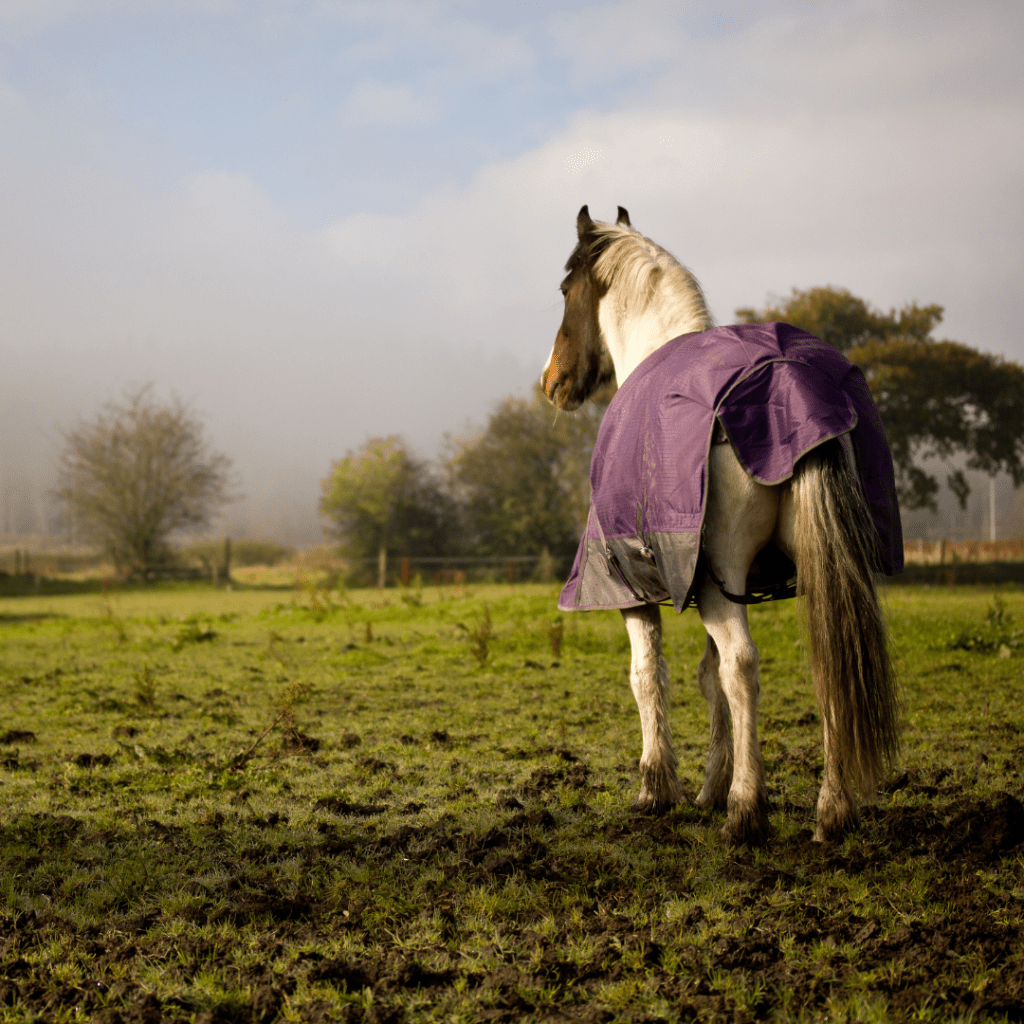
Over-rugging is essentially the act of putting too heavy of a rug on your horse, generally more common in transitional seasons such as Autumn and winter. While it is important to keep our horses comfortable, over-rugging can lead to a multitude of issues. Alongside sweating horses can experience issues with weight management and heatstroke. It is important to find the correct weight rug for your horse depending on the weather and the individual horse’s needs.
This man-made welfare problem has become more prevalent in recent years, with more veterinary professionals speaking out on the issue. Studies have suggested a link between equine obesity and care mismanagement such as overfeeding and over-rugging.
The issues of over-rugging are often underestimated within the equestrian community. Often horses are humanised and rugged incorrectly according to the temperature of their owners. In this blog, we delve further into the issue and hope to provide up-to-date advice to horse owners.
The Purpose of Horse Rugs
Why do we use horse rugs in the first place? In short, rugs are used to protect horses from various weather conditions and climates. If horses are clipped, a finer breed, a veteran or a poor doer, they will likely benefit from rugs in colder weather.
Horses are kept in a variety of climates, temperatures as diverse as 40°C to -40°C, during cold weather feeding good quality forage is generally sufficient for adult horses in good body condition to maintain a comfortable temperature.
As horse owners, we are responsible for ensuring their needs are met. Although we should certainly supply rugs when they are needed, it’s important to educate ourselves and not overdo it.
The Consequences of Over-Rugging
There is a wide range of issues that can occur from over-rugging, skin conditions such as folliculitis can pose a problem. Bacterial infections such as folliculitis or even rain scald thrive in warm, wet conditions. You must rug your horse appropriately, keeping them dry and sweat-free to prevent skin issues like this from forming.
Overheating is another concern for horse owners when over-rugging, horses experiencing high body temperatures can become dehydrated, lethargic and weak, if severe it can also lead to colic or diarrhoea.
During a Horse & Hound interview with vet Tess Fordham, she stated “We are called out to horses displaying signs of colic, but actually they are too hot and suffering heatstroke. This is a man-made welfare problem.”.
I have seen cases at yards I have visited in the past, the worst I have seen was when taking the rug off a horse that had been in the field to find him covered in a thick foamy sweat. He was very uncomfortable and we kept a very close eye on him whilst he cooled down.
Recognising Over-Rugging
Recognising over-rugging if you own or work with horses is vital, general signs to look out for include sweating, loss of appetite, colic-like symptoms, rapid heart rate, increased breathing rate, lethargy & dehydration.
How To Avoid Over-Rugging
As mentioned previously, it’s important to remember all horses are individuals, what is a comfortable temperature for one horse, will not be for another. Body condition score, age, breed, whether their coat is clipped etc could all have an effect.
As a general guide, this table from Equus England can be extremely useful:

Conclusion
In conclusion, the hidden dangers of over-rugging horses in the UK are a serious concern that has gained increasing attention within the equestrian community and the veterinary profession. Understanding the hidden dangers of over-rugging and taking proactive steps to address this issue will lead to healthier, happier horses.
If you are passionate about horse welfare and over-rugging, please do share this blog with fellow equestrians and check out the sources I have linked throughout. If you have any experiences with over-rugging you would like to share, please do contact me via my socials or my email hannahehopkins@live.co.uk.
 Pushing On Daisy